Electronics Hardware

Review: Gatetop Low Voltage 12 – 48V DC/AC E27 Light Bulb

A couple of weeks ago, we reviewed the Heetech Low Voltage 12 – 85V DC/AC E27 Light Bulb. While it had a large input range of 12 to 85V, the luminous output started to dim as the voltage fell below 13.0V. If operated on a 12V battery, the reduction in light intensity was noticeable as the battery’s terminal voltage reduced throughout the night. It was also advertised and marked as 9W, but only consumed 7 to 8 watts. At that stage, it was time to try a different product and see if we could find anything better. I ordered two

Electronics Hardware

Review: Heetech Low Voltage 12 – 85V DC/AC E27 Light Bulb

In off-grid systems, it can make sense to use a low voltage DC light bulb, instead of having the overheads of a DC to AC inverter – in terms of capital cost, quiescent (idle) current, conversion efficiency and risk of electrocution. For example, in a shed or other de-attached structure you could have a small 12V or 24V PV Solar system and run your lighting directly from that source. LED bulbs exist in standard E27 (Edison screw, 27mm) and B22 (Bayonet cap, 22mm) that can be powered from lower voltages – typically 12V, 24V or 48V. We review one such

Electric Vehicles

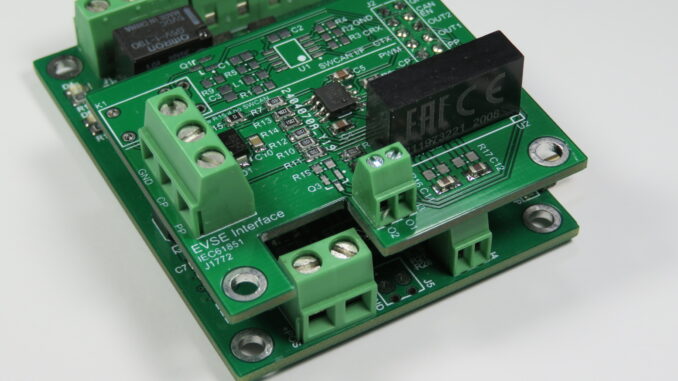
Prototype IEC61851 / J1772 EVSE Interface

This is a prototype IEC61851 / J1772 EVSE (Electric Vehicle Supply Equipment) Interface intended to connect to a 3.3V micro-controller of your choice. It was originally designed to piggyback on the Electric Vehicle Charge Controller PCB (shown above) and utilise the on-board Microchip dsPIC33 MCU. Firmware for the dsPIC33 is currently working. Code is now being developed for the ESP32. The ESP32 has WiFi capability and this will enable the EVSE to retrieve electricity market pricing or instantaneous PV solar generation data. Below are selection of open source designs for EVSE. Some have been through multiple revisions and make a

Electric Vehicles

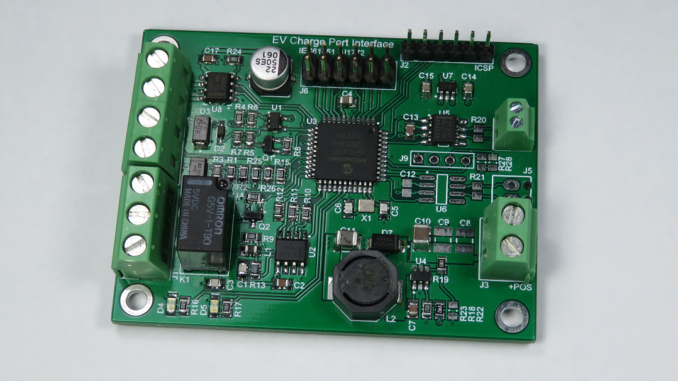
IEC61851 / J1772 Electric Vehicle Charge Controller

This device acts as the vehicle when connected to an EVSE (Electric Vehicle Supply Equipment) and negotiates the supply of power. It can be used in EV (Electric Vehicle) conversions, or in applications where you want to obtain power from public charging infrastructure – i.e., battery trailers to replace dirty and noisy generators, electric watercraft etc. Both hardware and firmware is provided as open source. The provided firmware will allow the EVCC to successfully request power and obtain the maximum obtainable current. Boiler plate code is available for the CAN interface and some firmware development would be expected to interface

Electronics Hardware

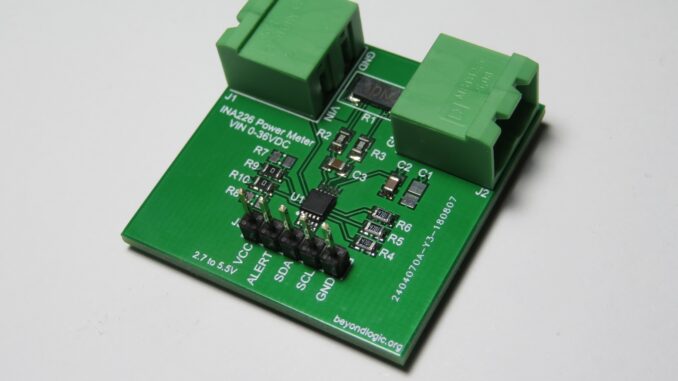
INA226 DC Voltage/Current/Power Monitor

A breakout board for a DC Voltage/Current/Power Meter based on the popular INA226 36-V, Bi-Directional, Ultra-High Accuracy, I2C Current/Power Monitor with Alert.  While many INA226 breakout boards are available from eBay/Banggood/AliExpress (e.g. CJMCU-226) they do not allow for easy connection of the bus voltage. In addition, we list different shunt resistor values you can use to customise the current range to best suit your application. Specifications Design Notes The device is powered via a separate 2.7 to 5.5V power supply connected to J3. Typical power consumption is just 330uA @ 3.3V.  The signed 16-bit bus voltage register has a least significant bit/resolution

CAN - Controller Area Network

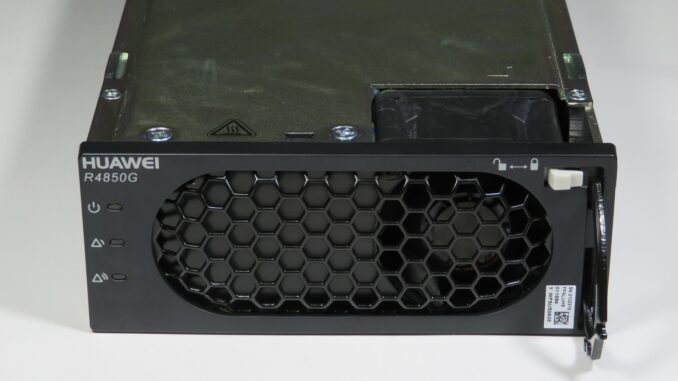
Review: Huawei R4850G2 Power Supply 53.5VDC, 3kW with CAN

The Huawei R4850G2 is a very capable 48V Telecommunications grade power supply available brand-new at cheap surplus prices (normally under $100 USD). Rated at 3000W, it can deliver a considerable 56.1A when powered from a suitable 200-240V rated AC source. The CAN2.0B interface allows for online monitoring and/or adjustment of the output voltage and current. Given the power supply is a Telecoms spare part (most likely for a Huawei mobile phone Base Terminal Station), a surprisable amount of official documentation exists on the hardware from the manufacturer: But when it comes to the CAN communications protocol and operation, the best

Electric Vehicles

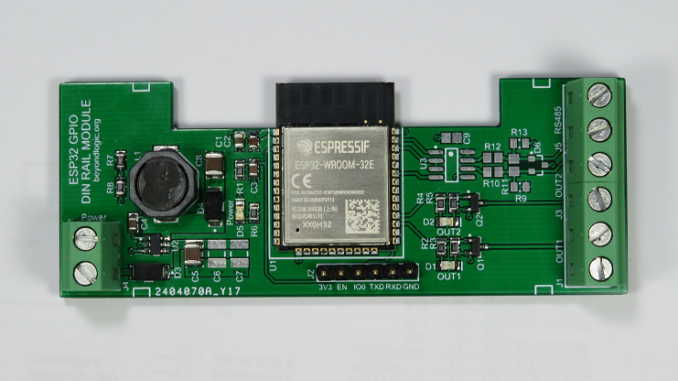
ESP32 DIN Rail Module

I’ve been wanting to automate my EV (Electric Vehicle) charging. It’s a long story for another day. I had started out with a high level RS485 interface into my EVSE (Electric Vehicle Supply Equipment) and hit some ‘bugs’. A month later, it turned out much easier to fall back to KISS principals (Keep it Simple, Stupid) and directly turn on and off the power when I needed too. While my EVSE is currently set to charge at a paltry 10 amps, I wanted something a little more robust than a cheap ESP8266 based Smart Plug adapter. Designed to a price

Electronics Hardware

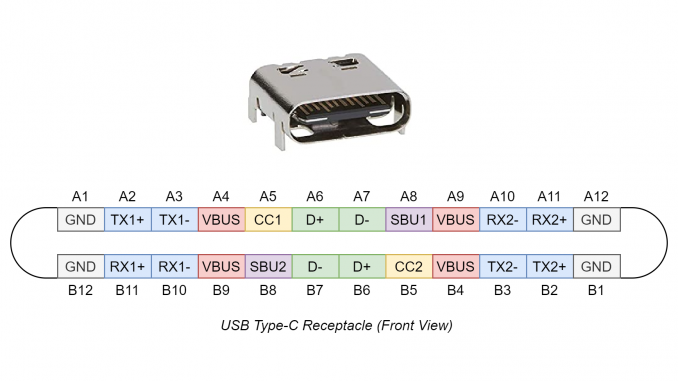
Primer: The USB-C Connector

Anyone who has used a USB Type-A plug will know the fact that it takes three attempts to successfully insert. The USB Type-C connector sets out to solve this life’s little annoyance. But it doesn’t just stop there, it also offers many other advantages: Power Delivery USB has already established itself as an industry standard for low voltage (5V Type A) power and charging. Today everything from mobile phones, portable speakers to bike lights have a USB port for charging. USB ports can now be found integrated into power points, in cars, at bus shelters and even on trains. It

Electronics Hardware

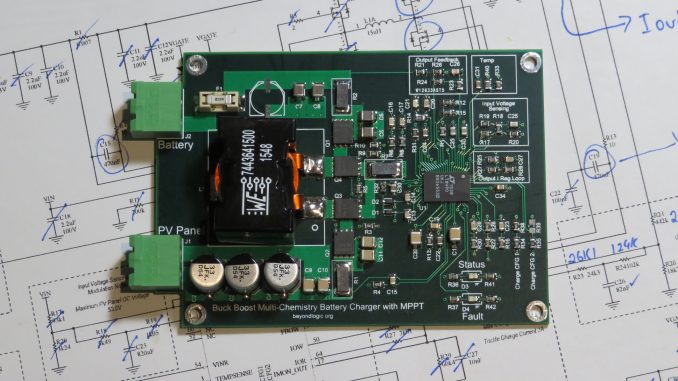
LT8490 MPPT Buck-Boost Multi-Chemistry Battery Charger

Most PV solar regulators are buck (step down) regulators and require the PV panel voltage to be above the battery voltage. This design uses a buck-boost topology and allows the PV solar voltage to be above, below or equal to the battery voltage. For example, you could charge a 48V battery bank from a 72 cell PV panel with a maximum power point voltage (VMP) of around 37V. The LT8490 allows for a PV panel voltage in the range of 6V to 80V. This makes it ideal for commodity 72 cell PV panels that typically have an open-circuit voltage (VOC)

Electronics Hardware

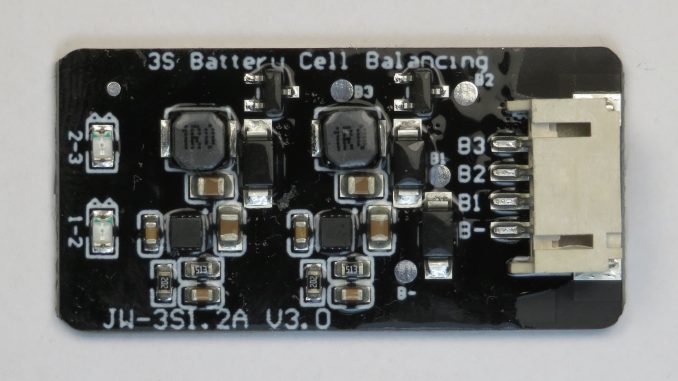
Review: Li-ion LiPo LiFePO4 Lithium Battery Active Equalizer Balancer Energy Transfer Board

Cheap Lithium Battery “Active Balancer” boards have been turning up on Aliexpress and other eCommerce sites. But there has been some scepticism if they are genuinely active balancing and quite a few conflicting forum posts. Some have even claimed the ‘1R0’ inductors are actually 1 ohm resistors. The more traditional passive balancer boards will simply dump any excessive charge into a resistor, wasting this energy. For example, if the maximum voltage threshold was set at 4.2V, once the cell’s terminal voltage exceeded 4.2V, any excess charge would be dumped into a resistor and dissipated as heat until the terminal voltage

Electronics Hardware

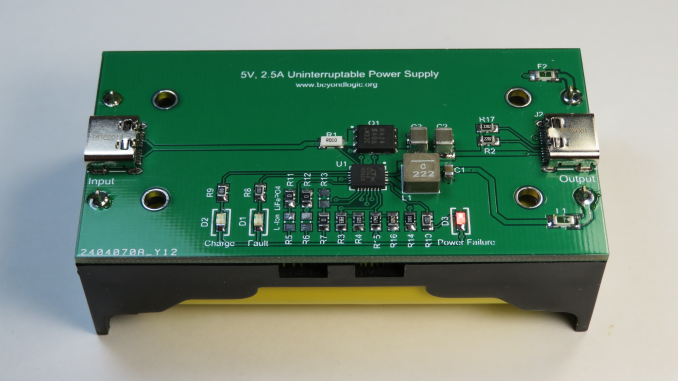
LTC4040 5V, 2.5A Uninterruptible Power Supply (UPS) with USB-C

Motivation I have had the requirement to back-up small 5V low-powered devices such as a Foscam C1 security camera and a Raspberry PI based LoRaWAN concentrator. Many commonly available 5V Uninterruptible Power Supplies feature a two chip design with a Li-Ion battery charger to charge the back-up battery, and boost converter to step up the battery voltage back up to 5V. Like most of my personal designs, cost was not a primary driver. I was on the search for a elegant, preferably single chip device that was fit for purpose. Lithium Ion batteries can be stressed when left at full

Electronics Hardware

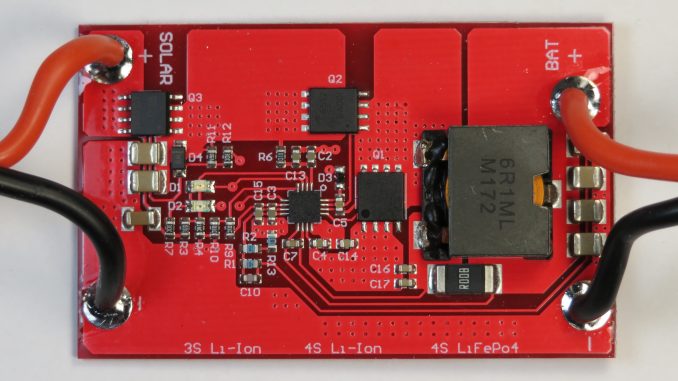
Review: BQ24650 5A MPPT Solar Controller 3S / 4S Li-Ion, LiFePO4, 12V Lead Acid

Designs based on the Texas Instrument’s bq24650 Synchronous Switch-Mode Battery Charge Controller for Solar Power With Maximum Power Point Tracking are commonplace on Aliexpress, ebay and Amazon. Consumers can purchase assembled PCBs, such as the one pictured above, or complete product enclosed in a relatively nice aluminium extruded housing. According to the silkscreen of versions pictured on-line, different variants are available including: 3S Li-Ion 4S Li-Ion 4S LiFePo4 12V Lead Acid I’m still old-school and wanted to purchase a 12V lead acid version, but couldn’t find any available for sale. And like many similar electronics products from the above mentioned

Electronics Hardware

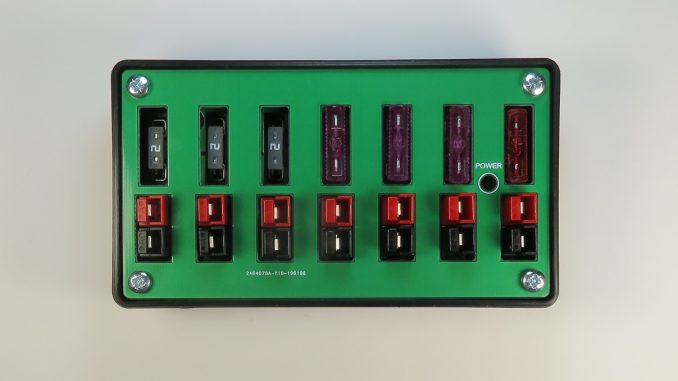
Powerpole Distribution Box

For far too long, I have been on the search for the ideal way to distribute power for low voltage systems, typically 12V. I have an small assortment of domestic networking gear, small embedded systems, LED desk lamps, battery chargers and USB chargers that operate from a backed-up 12V PV solar supply. I have finally settled on the “Powerpole” 15-45 connector from Anderson Power Products. The 15-45 denotes that the connector comes with terminals rated from 15 to 45 Amp. The housings are designed for voltages well exceeding 100V AC or DC depending upon your choice of UL or IEC certification.

Electronics Hardware

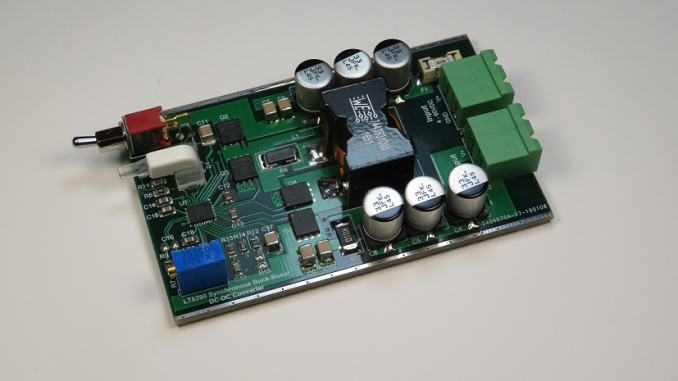
LT8390 Synchronous Buck-Boost DC-DC Converter

For the past couple of years, I have been powering my Sony 55” LCD TV and charging a couple of laptop computers from a 12V solar system. Both the Sony TV and the laptop computers have an input voltage of 19.5VDC. To step up the voltage from the battery, I purchased two “LTC3780 Automatic lifting pressure constant voltage step up step down 10A 130W” a.k.a. LTC3780 – High Efficiency, Synchronous, 4-Switch Buck-Boost DC-DC Converters from ebay. These boards operated from a moderately wide 5 – 36V input and had an output voltage range of 1 – 30V. The LTC3780 has

Electronics Hardware

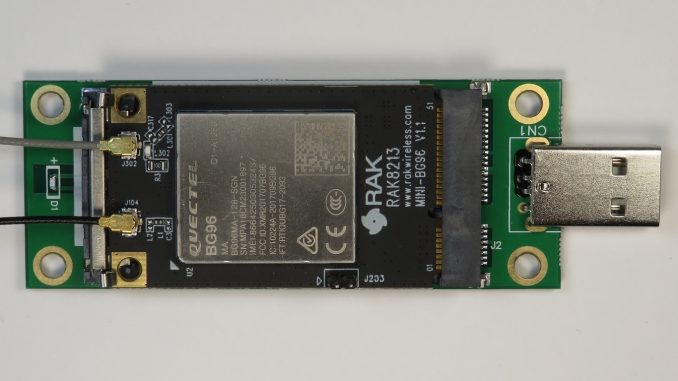
Review: RAK8213 LTE Cat M1/NB1 IoT Modem

The RakWireless RAK8213 is a Quectel BG96 based 4G LTE Cat M1/Cat NB1/EGPRS modem in a PCI Express MiniCard Form Factor. LTE categories M1/NB1 combined with innovations including Power Saving Mode (PSM) and Extended Discontinuous Reception (eDRX) can rival power consumption and battery life of other IoT Technologies such as LoRa and Sigfox. The RAK8213 is available from Aliexpress for just $39.90 USD. The BG96 includes an integrated TCP/IP stack with HTTP and MQTT client, greatly simplifying firmware development. The RAK8213 features: LTE Cat M1, Cat NB1 (NB-IoT) and EGPRS. GNSS – Support for GPS, GLONASS, BeiDou/Compass, Galileo and QZSS. Ultra Low Power.

Electronics Hardware

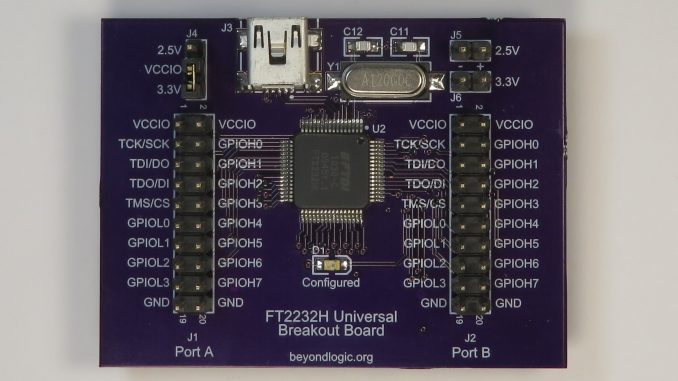
FTDI FT2232H USB to UART/MPSSE/JTAG Breakout Board

The FTDI FT2232H Hi-Speed Dual USB UART/FIFO Breakout Board provides a variety of standard serial and parallel interfaces: Asynchronous UART JTAG I2C SPI Parallel FIFO The board includes two linear regulators offering either 3.3V or 2.5V IO. An on-board Serial EEPROM stores custom USB descriptors, VID/PIDs and configurations. Design Files Design files can be downloaded from the Circuit Maker website. Circuit Maker is a free EDA tool from Altium. FT2232H Breakout version 1.A.1 Gerbers (Zip) FT2232H Breakout version 1.A.1 Schematics (PDF) The PCB for this design was fabricated by oshpark.com

Electronics Hardware

Review: WD2002SJ, XR-131 LTC3780 High Efficiency, Synchronous Buck Boost DC-DC Converter

Prevalent on ebay and Amazon is the “LTC3780 Automatic lifting pressure constant voltage step up step down 10A 130W” DC to DC Converter. (What a mouthful) I’m not quite sure what the “Automatic lifting pressure” is about (suspect Chinglish), but it is a fairly well designed DC-DC switcher based on Analog’s (formally Linear Technology) LTC3780 – High Efficiency, Synchronous, 4-Switch Buck-Boost Controller. The board sells for a bargain basement price of about $20 to $25 USD. My interest in this DC-DC switcher is to operate 19VDC laptops/notebooks and LCD TVs from 12V batteries/solar. I took the plunge and purchased two units. Here are